
5 Nowych osób, które wypełniły wizytówkęNew people who filled in the card
Etteplan Onboarding
TypType
UX Research
TagiTags
Employee Experience
Information DesignEmployee Experience
Information Design
StatusStatus
WdrożoneShipped
Dobre pierwsze wrażenie to nie wszystko. Nowe osoby wysoko oceniały onboarding, a wywiady pokazały trudności, których sama ocena nie widzi. A great first impression. A less clear first day. New people rated onboarding highly. The interviews showed difficulties the score itself could not see.
Samodzielnie poprowadziłem pracę od rozmów i kodowania po Skarbnicę wiedzy, która weszła do onboardingu. Skuteczności po wdrożeniu jeszcze nie mierzyłem. I led the work from the conversations and the coding through to the Skarbnica wiedzy, which then went into onboarding. Effectiveness after launch has not been measured.
15 wywiadów, około 30 minut. Średnia 4,75/5 tylko w grupie 10 nowych osób: sześć piątek, trzy czwórki z plusem, jedna czwórka. Kod szerszego wprowadzenia w Etteplan stoi przy 6 z tych 10. HR pomogło zacząć rekrutację. W rozmowach były osoby z IT, HR, zarządzania, administracji i marketingu. Kanału i zasięgu ta strona nie ustala. 15 interviews, about 30 minutes each. The 4.75/5 average is the 10 new people only: six fives, three scores of 4.5, one four. A code for a broader introduction to Etteplan sits with 6 of those 10. HR helped start recruitment. The conversations included IT, HR, management, administration, and marketing. This page does not settle the channel or the reach.
Lipiec. Od scenariusza do materiału. July. From the guide to the material.
1 lipJul 01
8 lipJul 8
16 lipJul 16
24 lipJul 24
31 lipJul 31
Podróż nowej osoby. A new person's journey.
Z rozmów z 10 nowymi osobami, z dopowiedzeniem osób organizujących proces. From the 10 new employees, with input from the people who organise the process.
| Rekrutacja i oczekiwaniaRecruitment & expectations | Przed pierwszym dniemBefore day one | Przyjście i pierwszy dzieńArrival & first day | Sprzęt i dostępSetup & access | Poznanie firmyLearning the company | Pierwszy tydzieńFirst week at work | Wejście w firmęSettling in | |
|---|---|---|---|---|---|---|---|
| Cele pracownikaEmployee goals |
|
|
|
|
|
|
|
| Punkty stykuTouchpoints |
|
|
|
|
|
|
|
| MyśliThoughts |
|
|
|
|
|
|
|
| DoświadczenieExperience |
|
||||||
| ProblemyPain points | Część osób dostała więcej kontekstu o kliencie niż o samym Etteplan.Some people received more context about the client than about Etteplan itself. | Praktyczna informacja była porwana: brak agendy, niejasny parking i dojście, niepewność co do stroju.Practical information was fragmented: no clear agenda, unclear parking and way in, dress-code uncertainty. | Parking i nawigacja po biurze. Role nie zawsze nazwane. Buddy nie zawsze wskazany.Parking and office navigation. Roles not always named. A buddy not always pointed out. | Problemy techniczne po stronie Etteplan i klienta. W kilku przypadkach opóźniony dostęp albo brak narzędzia.Technical issues on both the Etteplan and the client side. In a few cases, delayed access or a missing tool. | Za mało o firmie. Niejasne benefity, słaby intranet, niejasna nazwa działu, cienki kontekst kultury.Too little about the company. Unclear benefits, a quiet intranet, an unclear department name, thin cultural context. | Braki wychodzą dopiero po starcie. Informacja jest w wielu kanałach. Ludzie chcą jednego miejsca, do którego wracają.Gaps show up only after the start. Information sits in many channels. People want one place to come back to. | Wejście w firmę słabnie, gdy onboarding jest głównie o kontekście klienta.Company integration is weaker when onboarding stays mostly about the client context. |
| Odpowiedź projektowaDesign response | Obok kontekstu klienta: krótkie wprowadzenie w Etteplan, kulturę i układ firmy.Beside the client context: a short introduction to Etteplan, its culture, and how the company is set up. | Przed pierwszym dniem: agenda, dojazd, parking, strój, kontakty i krótkie FAQ.Before day one: an agenda, the way in, parking, dress, contacts, and a short FAQ. | Od startu widać, kto pomaga, plus mapa dojścia i numery.From the start, who helps is visible, with an arrival map and numbers. | Krótka lista setupu, nazwany właściciel i wczesne sprawdzenie dostępów.A short setup list, a named owner, and an early check that access is ready. | Krótki moment o samym Etteplan i jedno wejście do informacji wewnętrznych.A short moment about Etteplan itself, and one entry point for internal information. | Skarbnica jako miejsce, do którego wraca się po starcie, nie tylko powitanie.The knowledge sheet as a place to return to after the start, not only a welcome. | Tożsamość Etteplan, ludzie i orientacja w firmie w pierwszych dniach.Etteplan identity, people, and a clear orientation inside the company in the first days. |
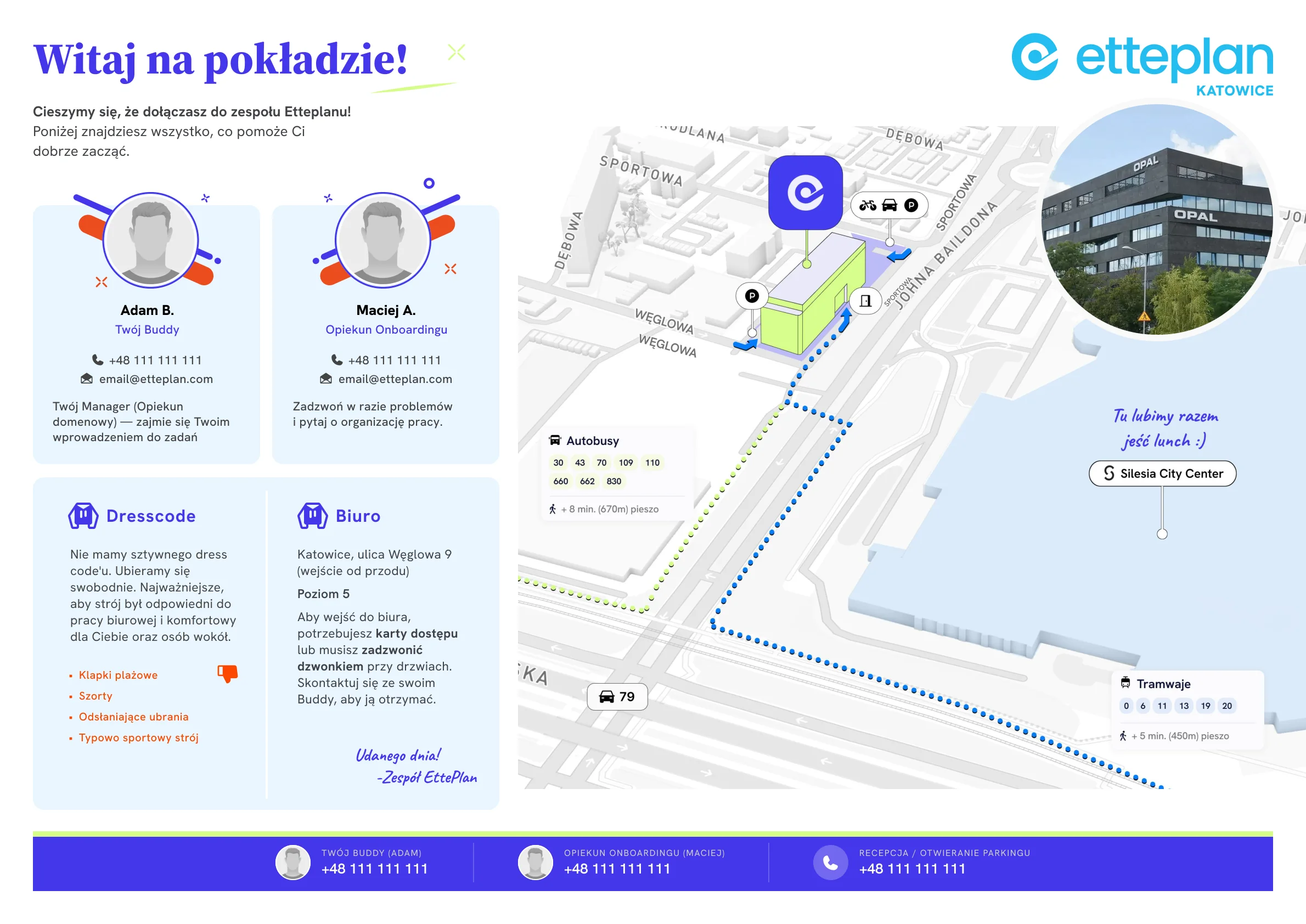
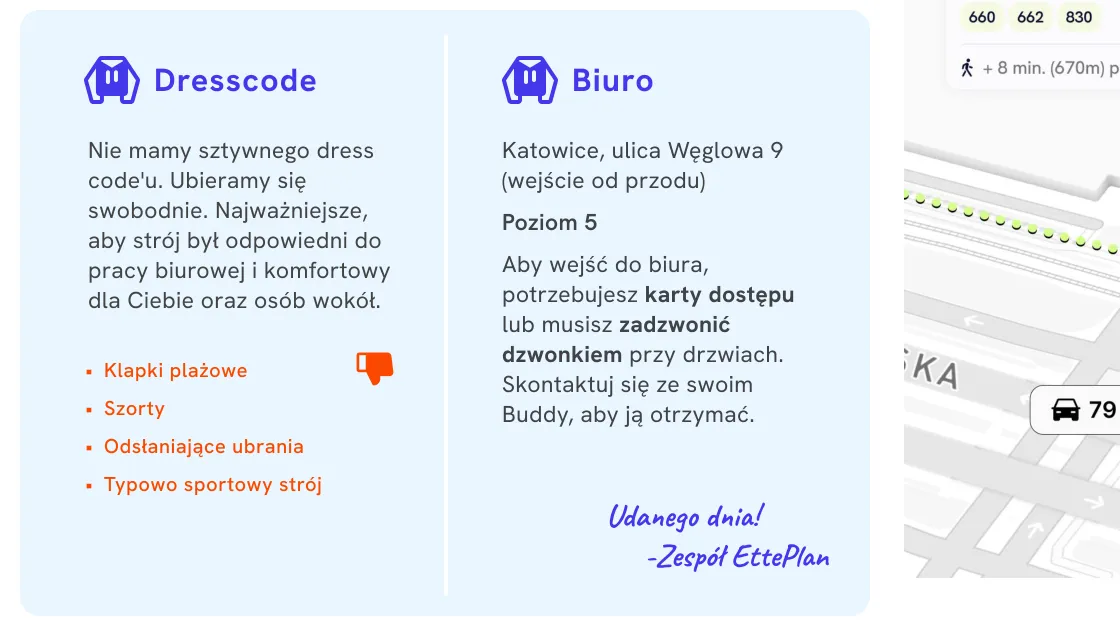
Wiersz odpowiedzi to kierunek projektu. Do onboardingu weszła Skarbnica wiedzy przed pierwszym dniem: kontakt, biuro, strój, mapa i parking. The design-response row is the direction of the work. The knowledge sheet that went into onboarding, before day one, covers a contact, the office, dress, the map, and parking.
Badanie Research
Od tropu w HR do 15 rozmów. Średnia zostaje. Pytanie jest o moment, w którym brakuje konkretu. From a lead in HR to 15 conversations. The average stays. The question is the moment a concrete fact is missing.
Duża firma. Bardzo osobisty pierwszy dzień. A large company. A very personal first day.
Etteplan to międzynarodowa firma technologiczna. Wspiera przedsiębiorstwa w inżynierii, oprogramowaniu i komunikacji technicznej. W Polsce działa między innymi w Katowicach. Zanim nowa osoba zacznie pracę, musi wiedzieć, gdzie się pojawić, kogo zapytać i gdzie wrócić po informację. Szersze badanie obejmowało też wizytówki. Ta historia zostaje przy starcie i przy Skarbnicy wiedzy. Etteplan is an international technology company. It supports other businesses in engineering, software, and technical communication. In Poland it works from Katowice, among other places. Before a new person starts, they need to know where to show up, who to ask, and where to go back for an answer. The wider study also covered profile cards. This story stays with the start, and with the knowledge sheet.
Przed startem, pierwszy dzień, pierwsze tygodnie. Opis firmy z Before day one, the first day, the first weeks. Company description from etteplan.com/about-us.
4,75 na 5. I te same pytania. 4.75 out of 5. And the same questions.
Dziesięcioro nowo zatrudnionych wysoko oceniło wdrożenie i ceniło atmosferę oraz sprawne wejście w projekty klientów. Obok tego wracały konkretne braki: alejka parkingowa, strój, kontakt, benefity. Część osób znała już projekt klienta, a i tak chciała lepszego wprowadzenia w sam Etteplan. Ten new hires rated the onboarding highly and valued the atmosphere and a smooth start on client projects. Beside that, concrete gaps kept returning: the parking aisle, what to wear, a contact, benefits. Some people already knew the client project and still wanted a better introduction to Etteplan itself.
„Jedyne stresujące to to, że nie mogłem na początku znaleźć alejki, gdzie są miejsca parkingowe Etteplan…”“The only stressful part was that, at the start, I could not find the aisle where the Etteplan parking spaces are…”
Gdzie pojawia się niepewność. Where uncertainty shows up.
Zacząłem od rozmowy w HR, potem sam dobrałem rozmówców. 10 nowych osób — pięć z wizytówką i pięć bez — oraz 5 osób z IT, HR, zarządzania, administracji i marketingu. Ich perspektywa nie wchodzi do średniej. Mała próba miała pokazać problemy i kontekst, nie częstość w całej firmie. I started with a conversation in HR, then chose who to interview. 10 new people — five with a profile card and five without — plus 5 people from IT, HR, management, administration, and marketing. Their view is not part of the average. A small sample was there to show problems and context, not how often they occur across the company.
5 Nowych osób, które wizytówki nie wypełniłyNew people who did not fill in the card
5 Osób organizujących procesStakeholders
IT, HR, kierownik zespołu, asystent departamentu, marketingIT, HR, team manager, department assistant, marketing
- Co w pierwszych dniach działa i warto to zostawić?What works in the first days and should stay?
- Których informacji brakuje przed startem?Which information is missing before the start?
- Czy wiadomo, gdzie wrócić, gdy informacja znów jest potrzebna?Is it clear where to go back when the information is needed again?
- Jakie obciążenie widzą osoby, które proces organizują?What load do the people who organise the process see?
Dalej: scenariusz, 15 wywiadów, notatki, ręczne kodowanie w Excelu, porównanie, raport, projekt materiałów, wdrożenie. Ewaluacja po udostępnieniu jeszcze się nie odbyła. Then: the guide, 15 interviews, notes, hand coding in Excel, the comparison, the report, the materials, shipping. An evaluation after release has not happened.
Pytania do konkretnych historii. Questions for specific stories.
Każda z 10 nowych osób dostawała te same cztery pytania o onboarding: przebieg, pierwszy dzień, opiekun, narzędzia. Potem rozmowa rozgałęziała się według wizytówki. Generator wizytówek zostaje poza tą historią. Pięć osób organizujących proces jest osobną grupą. Each of the 10 new people got the same four onboarding questions: the arc, the first day, a buddy, the tools. The conversation then branched on the profile card. The card generator stays outside this story. The five people who organise the process are a separate group.
Wspólne pytania o onboarding The shared onboarding questions
Zapis z transkrypcji scenariusza „Lista pytań”. Te cztery pytania dostawała każda z 10 nowych osób. Punkty w nawiasie „dopytać” to notatki dla prowadzącego, nie zdania czytane na głos. From the transcription of the “question list” guide. These four questions went to each of the 10 new people. Lines marked “follow up” are notes for the interviewer, not sentences read aloud. English here is an editorial translation of the Polish guide.
1. Opowiedz krótko jak przebiegał twój proces onboardingu. (Przed rozpoczęciem pracy i w pierwszych dniach)Briefly tell me how your onboarding went. (Before you started, and in the first days.)
- Co zapamiętałeś/aś, co było bardzo dobre? Dopytać dokładnie, co się wydarzyło.What do you remember as having been very good? Follow the event.
- Co zapamiętałeś/aś, co było stresujące? Dopytać dokładnie, co się wydarzyło.What do you remember as having been stressful? Follow the event.
- Jakich informacji Ci zabrakło?What information did you not have?
- Jakie informacje dotarły za późno?What information arrived too late?
- Jak oceniasz ten proces w skali od 1 do 5? 5 — był przyjemny, 1 — był stresujący.How do you rate the process from 1 to 5? 5 — it was pleasant, 1 — it was stressful.
- Czy otrzymałeś(-aś) plan lub agendę pierwszego dnia?Did you receive a plan or an agenda for the first day?
- Czy zostałeś/aś wprowadzony/a w aspekty kulturowe firmy: wartości, misja, dress code, inne istotne informacje?Were you introduced to the culture of the company: values, mission, dress code, other things that matter?
- Czy są rzeczy, których w tym wprowadzeniu zabrakło? Jakie?Was anything missing from that introduction? What?
2. Jak wyglądał Twój pierwszy dzień w pracy?What did your first day at work look like?
- W jakim stopniu to, co zastałeś/aś w pierwszym dniu, zgadzało się z oczekiwaniami? 5 — wszystko według oczekiwań, 1 — nic według oczekiwań.How far did the first day match what you expected? 5 — everything did, 1 — nothing did.
3. Czy miałeś/aś przypisaną osobę albo mentora, do którego mogłeś/aś się zgłosić o pomoc?Did you have an assigned person or mentor you could ask for help?
- Czy przypisana osoba wywiązała się ze swojego zadania?Did that person do what they were there to do?
4. Czy od początku miałeś/aś dostęp do sprzętu i wszystkich potrzebnych narzędzi? Czego zabrakło i jak wpłynęło to na twoją pracę?From the start, did you have the equipment and every tool you needed? What was missing, and how did that affect your work?
Pytania o wizytówkę — obie gałęzie Profile-card questions — both branches
Ta gałąź jest częścią metody, nie tematem case study. W kadrach scenariusza brakuje dalszego ciągu pytania 8 i całego pytania 9 w grupie osób, które wizytówkę wypełniły, oraz końcówki pytania 10 w drugiej grupie. Luk nie uzupełniam. This branch is part of the method, not the subject of the case study. The photographed guide is missing the rest of question 8 and all of question 9 for people who filled in the card, and the end of question 10 for the other group. Those gaps stay empty.
Osoby, które wypełniły wizytówkęPeople who filled in the card
1. Możesz krótko opowiedzieć, jak przebiegało wypełnianie w Twoim przypadku?Can you briefly say how filling it in went in your case?
- Czy było wcześniejsze doświadczenie z Figmą albo z programami graficznymi.Any earlier experience with Figma, or with graphics tools at all.
- Jak szło kadrowanie zdjęć.How the photo cropping went.
- Co było niezrozumiałe?What was unclear?
- Czy podczas wypełniania brakowało jakichś informacji?Was any information missing while you were filling it in?
2. Jak oceniasz ten proces? Czy to było proste? Skala 1–5: 5 — bardzo proste, 1 — trudny nie do przejścia.How do you rate the process? Was it simple? Scale 1–5: 5 — very simple, 1 — too hard to get through.
3. Jak oceniasz ten proces? Czy tworzenie było przyjemne? Skala 1–5: 5 — przyjemność, zabawa, 1 — stres i trudność.How do you rate the process? Was making it pleasant? Scale 1–5: 5 — pleasant, playful, 1 — stress and difficulty.
4. Ile czasu mniej więcej zajęło Ci wypełnienie wszystkiego?Roughly how long did filling in everything take?
5. Kiedy otrzymałeś/aś prośbę o wizytówkę? Kiedy i gdzie ją wypełniałeś/aś?When did the request for a card arrive? When and where did you fill it in?
6. Co sądzisz o takiej formie przedstawienia osoby?What do you think of this way of introducing a person?
7. Co sądzisz o pytaniach zadanych w wizytówce?What do you think of the questions on the card?
- Jak oceniasz ich ilość: za mało, za dużo, w sam raz.How do you rate the number: too few, too many, about right.
- Czy nie są zbyt prywatne.Whether they are too private.
- Czy jakieś pytanie byś odrzucił/a? Jakie.Would you drop any question? Which.
- Jaki wpływ mają takie odpowiedzi na budowanie relacji w firmie? Skala 1–5: 1 — nie mają wpływu, 5 — mogą ułatwić nawiązywanie relacji.What effect do answers like these have on relationships at work? Scale 1–5: 1 — none, 5 — they can make it easier to connect.
8. Co sądzisz o zdjęciach w wizytówce?What do you think of the photos on the card?
- Jak oceniasz ich ilość: za mało, za dużo, w sam raz.How do you rate the number: too few, too many, about right.
Dalsza część pytania 8 jest ucięta na zdjęciu scenariusza. Nie dopisuję jej.The rest of question 8 is cut off in the photograph of the guide. I am not filling it in.
9. Pytanie 9 nie jest widoczne na żadnym z kadrów. Zostawiam lukę.Question 9 is not visible in any of the frames. The gap stays.
10. Czy widziałeś/aś prezentacje pracowników wysyłane cyfrowo we wewnętrznych kanałach firmy? Co sądzisz o wizytówkach w mediach cyfrowych, na przykład ette? news na Teams?Have you seen employee introductions sent through the company’s internal channels? What do you think of cards shown in digital channels, for example ette? news on Teams?
11. Pomysł do porównania: zamiast wizytówki w programie, kanał na Teams, gdzie pierwszego dnia można napisać kilka słów o sobie i dołączyć wybrane zdjęcia.An idea to compare: instead of a card made in a tool, a Teams channel where on day one someone can write a few words about themselves and attach photos they choose.
- Którą formę wolałbyś/wolałabyś przygotować: wizytówkę w Figmie czy powitanie na kanale?Which would you rather prepare: a card in Figma, or a hello on the channel?
- Czy taką formę wizytówki byś wypełnił/a?Would you fill in a card in that form?
- Czy w pierwszych 3 dniach pracy byłby na to czas?Would there be time for it in the first three days?
12. Czy jest coś, o co nie zapytałem, a Twoim zdaniem warto powiedzieć na ten temat?Is there something I did not ask that you think is worth saying?
Osoby, które wizytówki nie wypełniłyPeople who did not fill in the card
1. Czy próbowałeś/aś wypełniać? Tak albo nie.Did you try to fill it in? Yes or no.
- Wcześniejsze doświadczenie z Figmą albo z programami graficznymi.Earlier experience with Figma, or with graphics tools.
- Kadrowanie zdjęć.Cropping the photos.
- Co było niezrozumiałe?What was unclear?
- Czy podczas wypełniania brakowało jakichś informacji?Was any information missing while filling it in?
2. Jak oceniasz ten proces? Czy to było proste? Skala 1–5: 5 — bardzo proste, 1 — trudny nie do przejścia.How do you rate the process? Was it simple? Scale 1–5: 5 — very simple, 1 — too hard to get through.
3. Kiedy otrzymałeś/aś prośbę o wizytówkę? Kiedy i gdzie ją wypełniałeś/aś?When did the request arrive? When and where did you fill it in?
4. Dlaczego nie wypełniłeś/aś? Czy było coś, co mogłoby sprawić, że jednak wypełnisz?Why did you not fill it in? Was there anything that would have changed that?
5. Co sądzisz o takiej formie przedstawienia osoby?What do you think of this way of introducing a person?
6. Czy czytałeś/aś treść wizytówki? Prowadzący pokazuje treść. Co sądzisz o pytaniach zadanych w wizytówce?Did you read what the card says? The interviewer shows the content. What do you think of the questions on it?
- Ilość: za mało, za dużo, w sam raz.The number: too few, too many, about right.
- Czy nie są zbyt prywatne.Whether they are too private.
- Czy jakieś pytanie byś odrzucił/a? Jakie.Would you drop any question? Which.
- Wpływ odpowiedzi na budowanie relacji, skala 1–5.The effect of the answers on relationships, on a 1–5 scale.
7. Co sądzisz o zdjęciach w wizytówce?What do you think of the photos on the card?
- Ilość: za mało, za dużo, w sam raz.The number: too few, too many, about right.
- Czy nie są zbyt prywatne.Whether they are too private.
- Jaki wpływ mają takie zdjęcia na budowanie relacji? Skala 1–5.What effect do photos like these have on relationships? Scale 1–5.
8. Czy byłeś/aś kiedyś w biurze?Have you ever been to the office?
- Czy widziałeś/aś wizytówki wydrukowane w kuchni przestrzeni wspólnej? Co o tym sądzisz?Did you see the printed cards in the shared kitchen? What do you think of that?
- Czy zdarzyło Ci się czytać wizytówki innych osób?Have you read other people’s cards?
9. Czy widziałeś/aś prezentacje pracowników wysyłane cyfrowo we wewnętrznych kanałach? Co sądzisz o wizytówkach w mediach cyfrowych, na przykład ette? news na Teams?Have you seen employee introductions sent through internal channels? What do you think of cards in digital channels, for example ette? news on Teams?
10. Pomysł do porównania: kanał na Teams, gdzie można napisać kilka słów o sobie i dołączyć wybrane zdjęcia, zamiast wizytówki w programie.An idea to compare: a Teams channel for a few words and chosen photos, instead of a card made in a tool.
- Porównaj z wizytówką w Figmie.Compare it with the card in Figma.
- Czy taką formę wizytówki byś wypełnił/a?Would you fill in a card in that form?
Dalszy ciąg tego pytania, jeśli był, jest poza kadrem. Nie dopisuję go.If this question continued, the rest is out of frame. I am not writing it in.
11. Notatka dla prowadzącego, nie pytanie. Jeżeli osoba jest dobrze nastawiona, można zaproponować wspólne wypełnienie wizytówki.A note for the interviewer, not a question. If the person is well disposed, you can offer to fill in a card together.
12. Czy jest coś, o co nie zapytałem, a Twoim zdaniem warto powiedzieć na ten temat?Is there something I did not ask that you think is worth saying?
Wnioski Findings
Ważne było to, co zaczęło się powtarzać. Żaden wzorzec nie unieważnia wysokiej oceny. What mattered is what started to repeat. No pattern cancels the high score.
Notatki ułożyłem w tabeli. Podobne zdarzenia dostawały wspólny kod, między innymi szersze wprowadzenie w Etteplan, benefity, parking, brak agendy i problemy techniczne klienta. Legenda trzymała znaczenie kodów. Kolory w oryginalnym arkuszu były dowolne. U sześciu na dziesięć nowych osób był kod wprowadzenia w firmę. Obok zostały rzadsze, konkretne ślady parkingu, benefitów i agendy. I laid the notes into a table. Similar events shared a code, among them a broader introduction to Etteplan, benefits, parking, no agenda, and client technical problems. A legend fixed what each code meant. Colours in the original sheet were arbitrary. Six of the ten new people carried the company-introduction code. Beside it were rarer, concrete traces of parking, benefits, and the agenda.
Od zdania do planszy. From a sentence to a sheet.
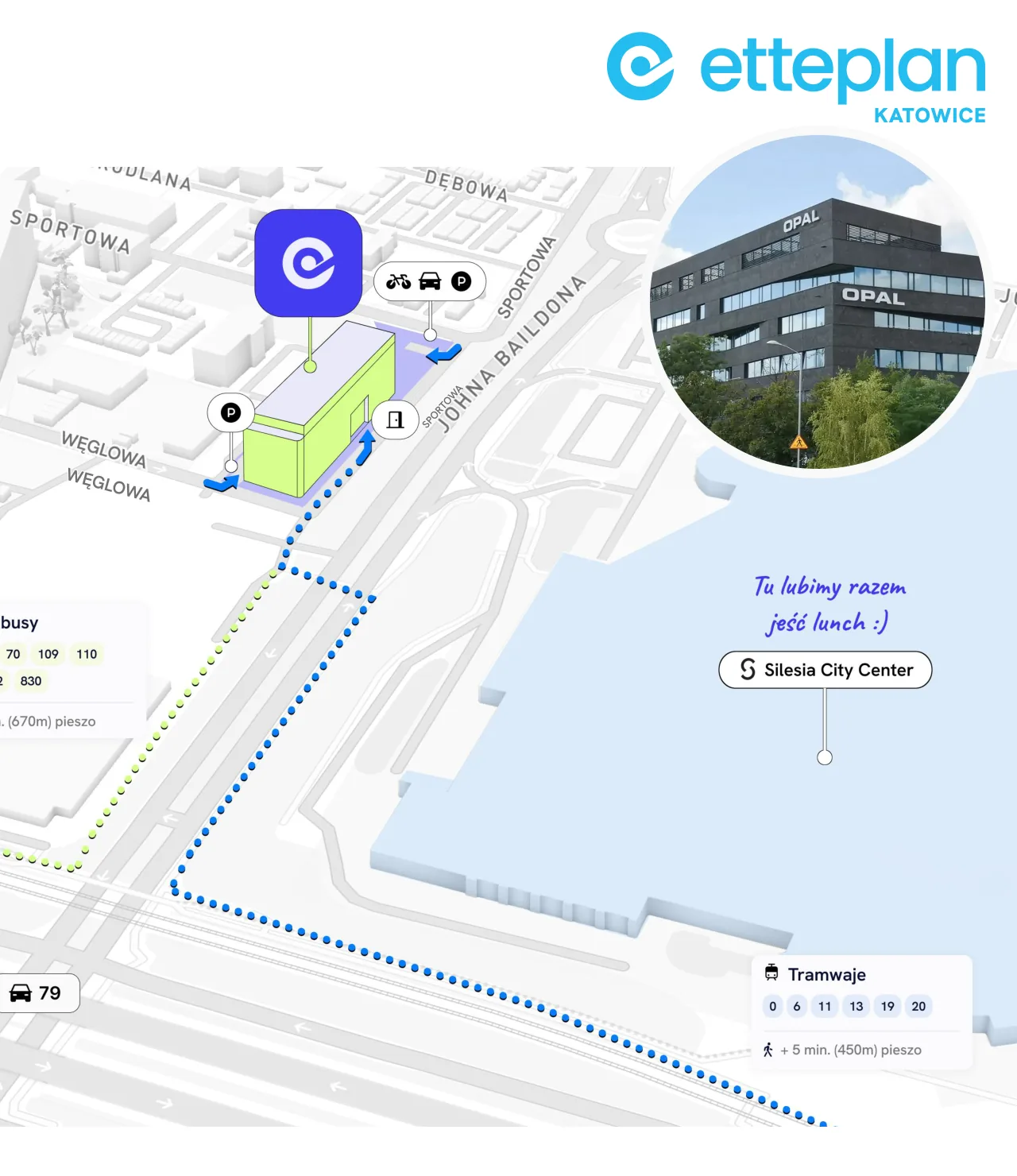
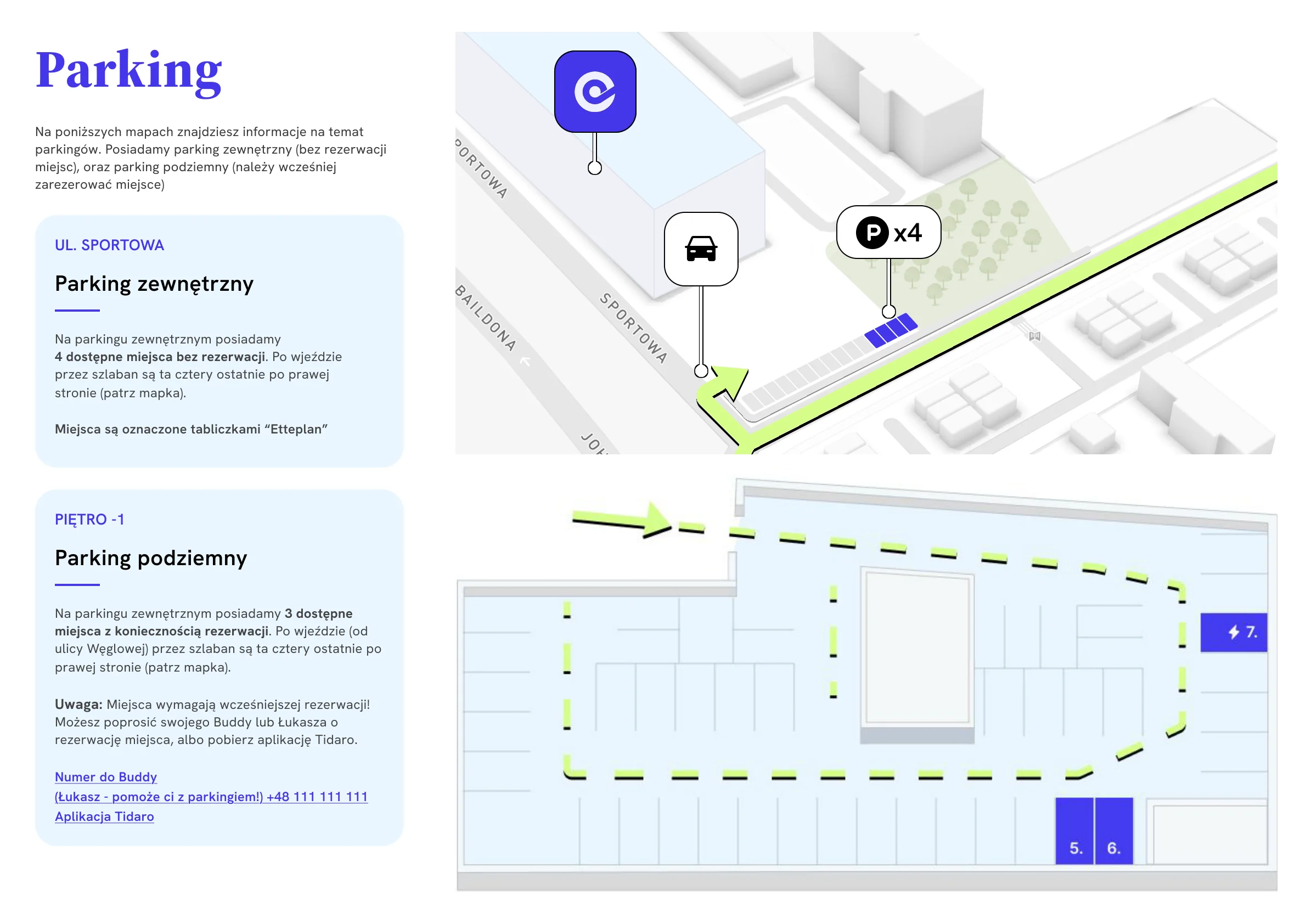
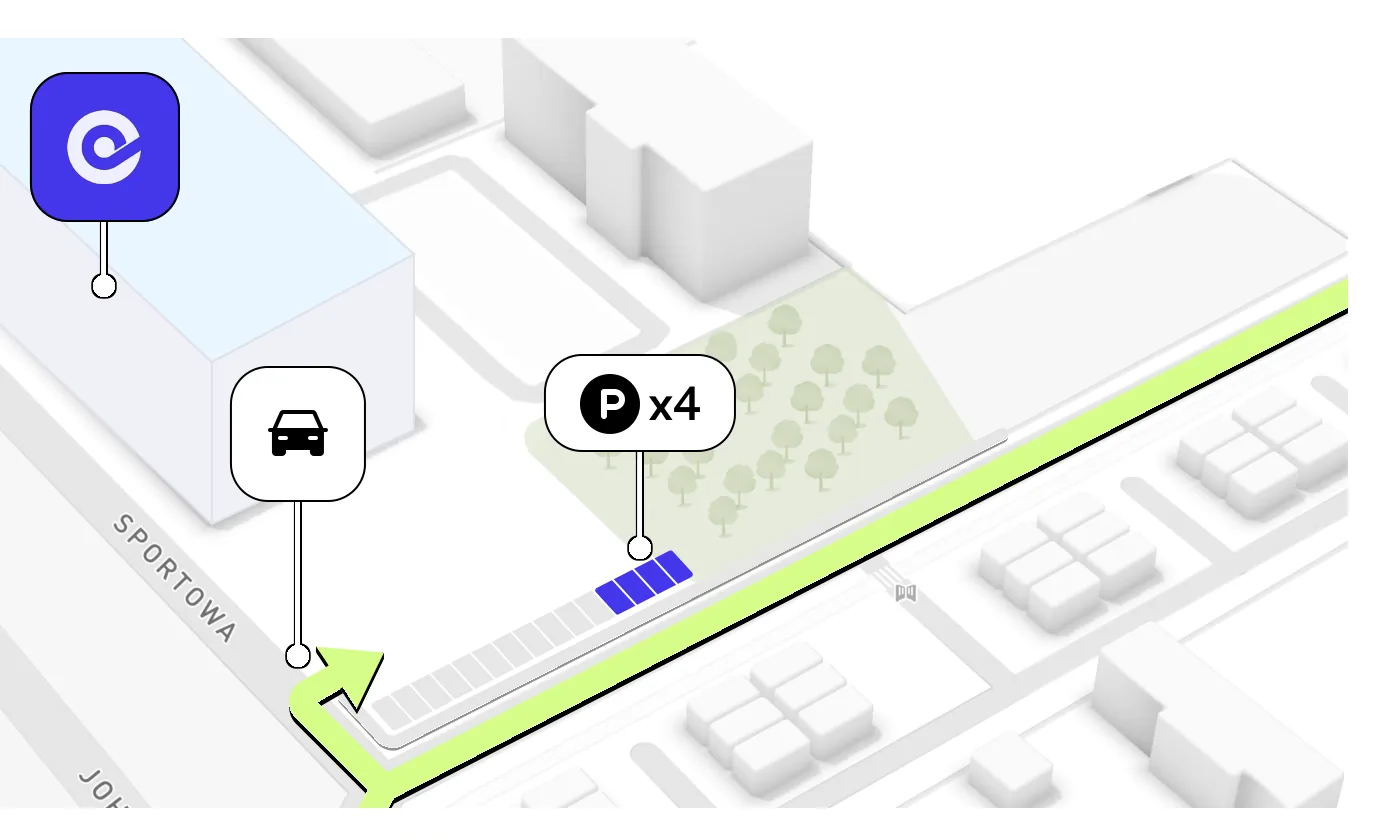
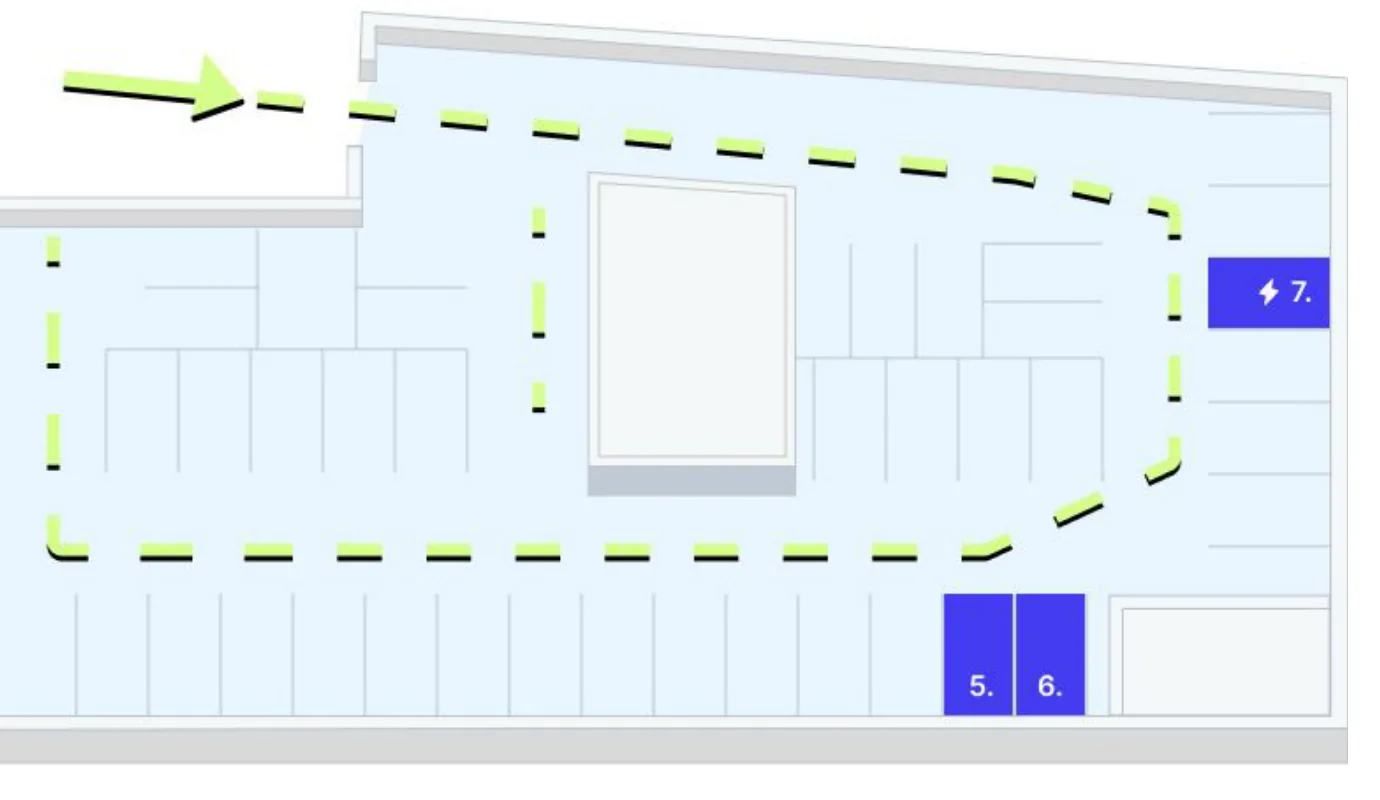
Parking: niepewność przy szukaniu alejki, kod nawigacji przy jednej osobie w tej macierzy, cytatu nie spinam z U02. Stąd mapa dojazdu, osobna strona parkingu, wejście i kontakt. Wdrożone. Skutek niezmierzony. Parking: uncertainty while looking for the aisle, a navigation code on one person in this matrix, and I do not tie the quotation to U02. From that, an arrival map, a separate parking page, the entrance, and a contact. Shipped. Effect not measured.
Pierwszy dzień: scenariusz pyta o agendę, opiekuna, sprzęt i braki. Kod braku agendy jest przy jednej osobie. Strona „Witaj na pokładzie” zbiera kontakt, biuro, zasady i mapę. Osobnej agendy ani pełnego modułu benefitów nie opisuję jako wdrożonych. First day: the guide asks about the agenda, a buddy, equipment, and gaps. The missing-agenda code sits with one person. The welcome sheet gathers a contact, the office, the rules, and a map. I do not describe a separate agenda, or a full benefits module, as shipped.
Nie wszystko wymagało zmiany. Not everything needed to change.
Nowe osoby ceniły atmosferę i przygotowanie do pracy przy projektach klientów. To był fundament, który warto było zostawić. New people valued the atmosphere and the preparation for client work. That was a foundation worth keeping.
6 × 5/5, 3 × 4,5/5, 1 × 4/5. n = 10. 6 × 5/5, 3 × 4.5/5, 1 × 4/5. n = 10.
Można znać projekt klienta i słabo znać własną firmę. You can know the client project and still barely know your own company.
Wracała potrzeba wprowadzenia w kulturę, zasoby i sposób działania Etteplan. W macierzy ten kod stoi przy sześciu osobach. Dwa pliki o pierwszym dniu tego nie domykają. A need kept returning: an introduction to Etteplan’s culture, resources, and way of working. In the matrix the code sits with six people. Two first-day files do not close it.
Informacja działa, gdy jest pod ręką. Information works when it is at hand.
Strój, wejście, parking, kontakty i zasady benefitów nie muszą być długie. Muszą być konkretne, zanim staną się potrzebne. Dress, the entrance, parking, contacts, and the rules around benefits do not need to be long. They need to be specific before they are needed.
„Myślę, że fajnie by było dostać jakiś taki skrót, jakby na przykład odnośnie benefitów.”“I think it would be good to get a short brief, for example about the benefits.”
Materiał Sheets
Dwa pliki weszły do onboardingu. Reszta zostaje rekomendacją, bez pomiaru po wdrożeniu. Two files went into onboarding. The rest stays a recommendation, with no measure after launch.
Jedno miejsce, do którego można wrócić. One place a person can come back to.
Problemem nie była sama ilość treści, tylko kolejność, forma i to, czy da się ją znaleźć. Skarbnica wiedzy jest krótkim materiałem na pierwszy dzień: biuro, dojście, kontakt, strój, parking. To information design, nie aplikacja i nie portal HR. Mapa parkingu nie naprawia problemów technicznych u klienta ani cienkiego wprowadzenia w firmę. The problem was not only the amount of content. It was the order, the form, and whether a person could find it. The knowledge sheet is a short piece for day one: the office, the way there, a contact, dress, parking. This is information design, not an application and not an HR portal. A parking map does not fix client-side technical problems, or a thin introduction to the company.
Jak materiał ma żyć później. How the material should live afterwards.
Najpierw pierwszy dzień.The first day first.Miejsce, dojazd, kontakt, parking i strój są od razu. Benefity i szersze zasoby firmy wymagają osobnego uporządkowania.Place, route, contact, parking, and dress are immediate. Benefits and the wider company resources need their own pass.
Mapa zamiast samego adresu.A map instead of an address alone.Adres nie mówi, którędy dojechać, gdzie jest wejście i które miejsca są dostępne.An address does not say which way to drive, where the entrance is, or which spaces are available.
Wspólny układ, wymienialna treść.One layout, swappable content.Dla kolejnych biur wymienia się mapę, parking, zdjęcia i kontakty, bez ruszania całej kompozycji.For further offices, the map, parking, photos, and contacts swap, without touching the whole composition.
Mało punktów, jedna trasa.Few points, one route.Ograniczyć liczbę punktów, podkreślić trasę i trzymać te same znaki, żeby następne biuro nie zaczynało rysunku od zera.Limit the points, emphasise the route, and keep the same marks, so the next office does not start the drawing from zero.
Poza plikiem. Beyond the file.
- Uporządkować mail powitalny i zebrać linki w jednym miejscu.Tidy the welcome email and gather the links in one place.
- Rozróżnić potrzeby osób na UoP i współpracowników B2B.Distinguish what employees and B2B collaborators need.
- Mocniej wprowadzać w Etteplan, nie tylko w projekt klienta.Introduce Etteplan more fully, not only the client project.
- Zbierać krótki feedback po pierwszym dniu, zamiast czytać doświadczenie z jednej średniej.Collect a short note after day one, instead of reading the experience from one average.
To rekomendacje. Ich wdrożenie nie jest tu potwierdzone. These are recommendations. Whether they shipped is not confirmed here.
Wdrożone. Bez pomiaru. Shipped. Not measured.
Wdrożone są wywiady, kodowanie, raport oraz plansze powitania i parkingu. Nie ma pomiaru, czy nowe osoby łatwiej znajdują informacje. Nie ma daty, kanału, zasięgu ani nazwiska osoby, która technicznie wprowadziła pliki. What shipped is the interviews, the coding, the report, and the welcome and parking sheets. There is no measure of whether new people find information more easily. There is no date, channel, reach, or name of whoever technically put the files into circulation.
Do sprawdzenia później: czy da się trafić na miejsce bez dodatkowego telefonu, czy kontakt jest pod ręką, czy ludzie wracają do materiału i czy te same tarcia wracają niezależnie od średniej. To hipotezy, nie wyniki. To check later: whether people arrive without an extra call, whether the contact is at hand, whether people come back to the material, and whether the same frictions return regardless of the average. These are hypotheses, not results.
Średnia nie jest całym doświadczeniem. An average is not the whole experience.
Wysoka ocena mogła sugerować, że onboarding działa bardzo dobrze. Dopiero rozmowy i kodowanie pokazały luki w dostępie do informacji i we wprowadzeniu w organizację. Rozwiązanie odpowiada na te luki, a nie jest redesignem całego procesu. A high score could suggest that onboarding works very well. Only the conversations and the coding showed gaps in access to information and in the introduction to the organisation. The solution answers those gaps. It is not a redesign of the whole process.
Pytania w scenariuszu są transkrypcją arkusza, nie zapisem spotkań. Wdrożenie potwierdziłem jako autor projektu. The guide questions are a transcription of the sheet, not minutes of the meetings. Shipping is confirmed by me, as the author of the work.

